Dating & Marriage · 연애 · 6 min read
Dating a Korean boyfriend: the unwritten rules (and the K-drama myths)
Day-one anniversaries, nonstop KakaoTalk, couple outfits, who pays, 'oppa', meeting his parents and the army. What dating a Korean man is often like, why, and what's changing.
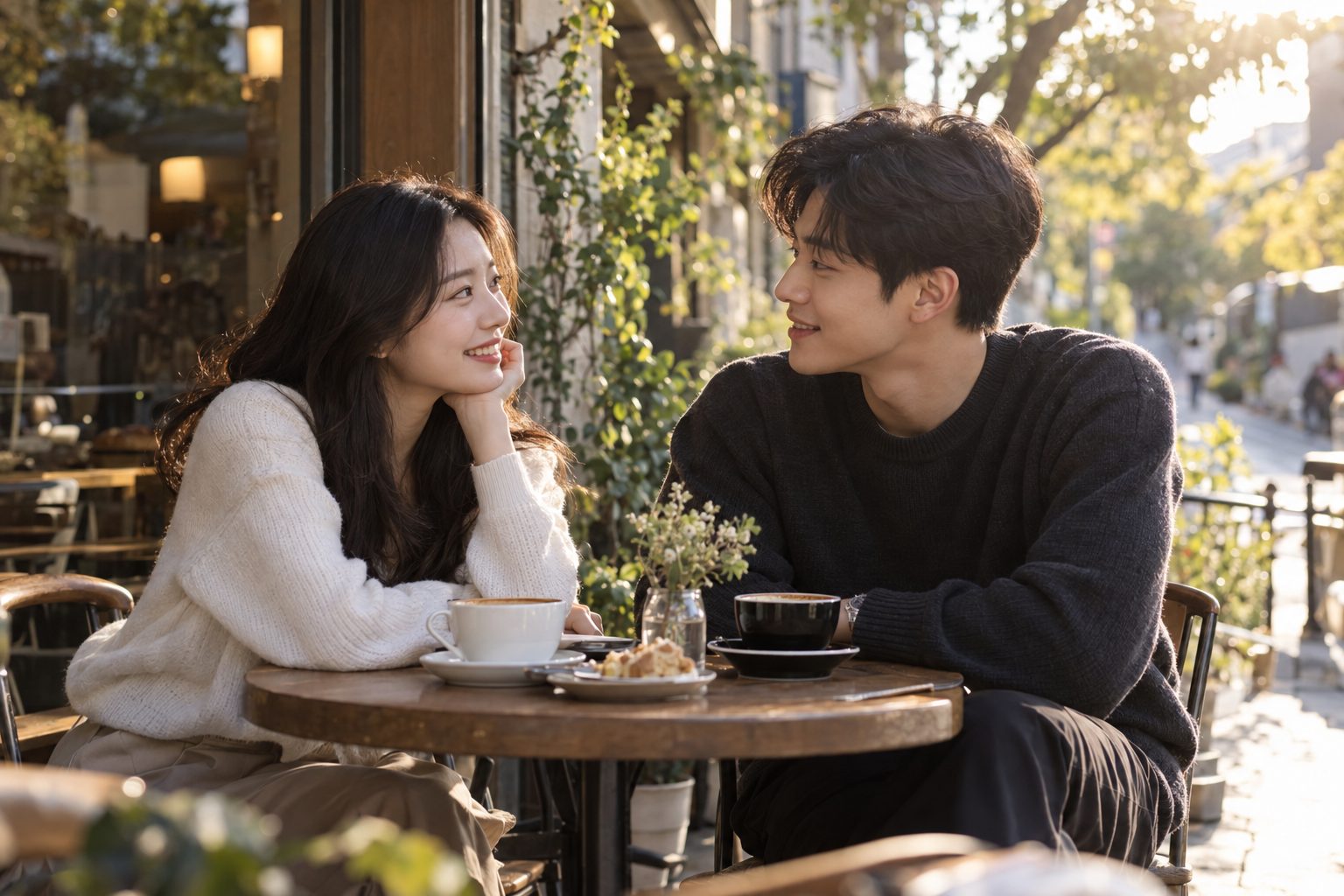
First, the honest disclaimer that K-dramas never give you: Korean men are individuals. Some are shy, some are loud, some are traditional, some have never watched a romance drama in their life. No article can tell you what your boyfriend is like.
What an article can do is explain the dating culture he grew up in: the habits his friends, his parents and every couple around him treat as normal. Knowing them helps you tell “this is him” from “this is just how dating works here”. Here are the ones that surprise people most.
1. The relationship starts on a specific day
In many Western cultures, people drift from dating into a relationship, and “are we exclusive?” can stay vague for weeks. For many Korean couples there’s a clearer line. Before it there’s 썸 (sseom, from “some-thing”), the flirty, undefined stage. Then someone makes a 고백 (go-baek, “confession”): “우리 사귈래?” (“Do you want to go out with me?”). If the answer is yes, that day is day one.
That date matters because couples count from it. Which brings us to…
2. Anniversaries come every 100 days
Korean couples commonly celebrate 100 days, 200 days, 300 days, then one year, and some keep going to 1,000 days. For couples who keep count, the 100-day mark (백일, baek-il) is usually the first big one, often with a gift, a cake or a special dinner. Couple apps count the days for you, and most count the first day as “1”, so day 100 arrives one day sooner than you’d think.
On top of that come the calendar holidays: Valentine’s Day (women traditionally give chocolate), White Day on March 14 (men give candy back), Pepero Day on November 11 (stick-shaped chocolate snacks, since 11.11 looks like four sticks), and Christmas Eve, which in Korea is more of a couples’ date night than a family holiday.
You don’t have to love all of this. But if one of you cares about day 100, agreeing on that early saves an awkward evening.
3. You’ll talk constantly
Many Korean couples message all day on KakaoTalk: good morning, did you eat lunch?, I’m leaving work, I’m home, good night. The word for keeping in touch, 연락 (yeol-lak), is a big deal, and “연락이 안 돼” (“he doesn’t keep in touch”) is one of the most common complaints in Korean relationship advice columns.
To someone from a more independent dating culture this can feel like a lot. Inside Korean couple culture, frequent check-ins are a way of showing you’re on each other’s mind. Neither side is wrong, but talk about it early, because a gap in expectations here causes more fights than almost anything else.
A simple way to start: “I can’t text much at work, but I’ll message at lunch and when I’m home.” Agreeing on a rhythm works better than either of you silently keeping score. One line worth drawing clearly: checking in is couple culture, but demanding your location all day, reading your phone or getting angry when you see friends is controlling behavior. That isn’t a Korean custom, and you don’t have to accept it.
4. “Oppa”, and why age still matters
If he’s older, you may be invited to call him 오빠 (op-pa), literally what a younger sister calls her older brother, and the standard word Korean women use for an older boyfriend. It’s affectionate, and for many Korean men it feels nice to hear. If he’s younger, you’re his 누나 (nu-na), which has its own fans.
Age shapes more than names. In traditional expectations, the older partner (often the man) takes the lead, plans dates and pays more. See why Koreans ask your age before your name for the background.
5. Who pays: from “the man pays” to the date account
Some couples still expect the man (or the older partner) to pay for most dates. Many others, especially in their 20s and 30s, alternate or split. Common patterns today:
- Taking turns. He pays for dinner, you pay for coffee or the movie.
- The date account (데이트 통장, de-i-teu tong-jang). Both partners put in the same amount each month, and dates come out of the shared account. This is popular and practical.
- Older pays more. Whoever earns more or is older covers more.
If he insists on paying every time, it may be pride, tradition or simply generosity. If you want to share, say so kindly and early. Offering to pay for the next thing is usually smoother than arguing over the bill at the counter.
6. Couple culture is public and proud
Matching 커플티 (couple T-shirts), couple rings, couple phone cases and matching sneakers are a very visible part of Korean dating. Couple sets are sold everywhere, and couple rings at around 100 days are common. Many couples love it. Some find it embarrassing and skip it. If he suggests matching jackets, he’s not being weird. In his world, it’s a way of saying “we’re together” to everyone.
Public affection, on the other hand, tends to be milder than in many Western countries: holding hands and leaning on each other is normal, but long kissing in public can draw looks, especially from older people.
7. The army is part of the story
Most Korean men complete mandatory military service, about 18 months in the army (longer in the navy and air force), usually in their early 20s. That has two effects on dating. Men often feel “behind” in career and money when they get out, which shapes when they feel ready for serious commitment. And couples who date through service have a famous test: waiting for a boyfriend to finish his service is a well-known rite of passage in Korean pop culture. If his service comes up, listen. For many men those years were hard, and it’s a topic with feelings attached.
8. Meeting the parents is a big step
In many Western cultures you might meet a partner’s parents fairly casually. In Korea, introducing a partner to your parents often signals that you’re thinking about marriage. Some couples date for years without the parents being involved at all. Others are introduced only once things are serious.
When you do meet them, the rules are different: polite speech, a small gift (fruit, good tea or something from your home country), standing when elders enter, accepting a drink with two hands. Parents’ opinions, especially mothers’, can carry real weight in Korean relationships, which ties into the strong duty to parents called 효 (hyo).
9. Feelings are shown, not always said
Many Korean men, especially those raised by more traditional parents, grew up in homes where “I love you” was rarely said out loud. Care is shown through action: making sure you’ve eaten, walking you home, remembering your cold and buying medicine, peeling the shrimp for you. That’s 정 (jeong), affection built through small acts and time.
The flip side is that problems can be shown indirectly too. Going quiet, short replies and sighs can mean “something’s wrong, please notice.” If you come from a culture of talking things through, gently saying “Tell me directly, I won’t be upset” goes a long way. (More on this in why Koreans rarely say no directly.)
10. The K-drama myths
A few things dramas get wrong, or at least exaggerate:
- Not every Korean man is a gentle, flower-carrying romantic. Some are, plenty aren’t, just like everywhere.
- The wrist-grab is not a love language. It’s a drama trope, not a dating norm.
- Chaebol heirs are not hiding in convenience stores. Sorry.
- Fluent Korean isn’t required, but effort is noticed. Learning a few phrases for his parents means more than you’d expect.
A short checklist
- Talk early about how often you’ll message.
- Know your day one, and expect day 100 to be celebrated.
- Agree on how you’ll split costs before it becomes an issue.
- Treat meeting his parents as a serious step, and prepare.
- When he shows care through food, rides and small favors, recognize it for what it is.
- When something feels off but isn’t said, ask kindly and directly.
Every relationship writes its own rules. But knowing the ones he grew up with makes it much easier to write yours together.