Dating & Marriage · 연애 · 6 min read
Dating a Korean girlfriend: the unwritten rules (and the ones you can ignore)
Check-in texts, 100-day anniversaries, couple outfits, who pays, 'oppa', her friends and her parents. The Korean dating habits worth knowing, why they exist, and how to talk about them without stereotypes.
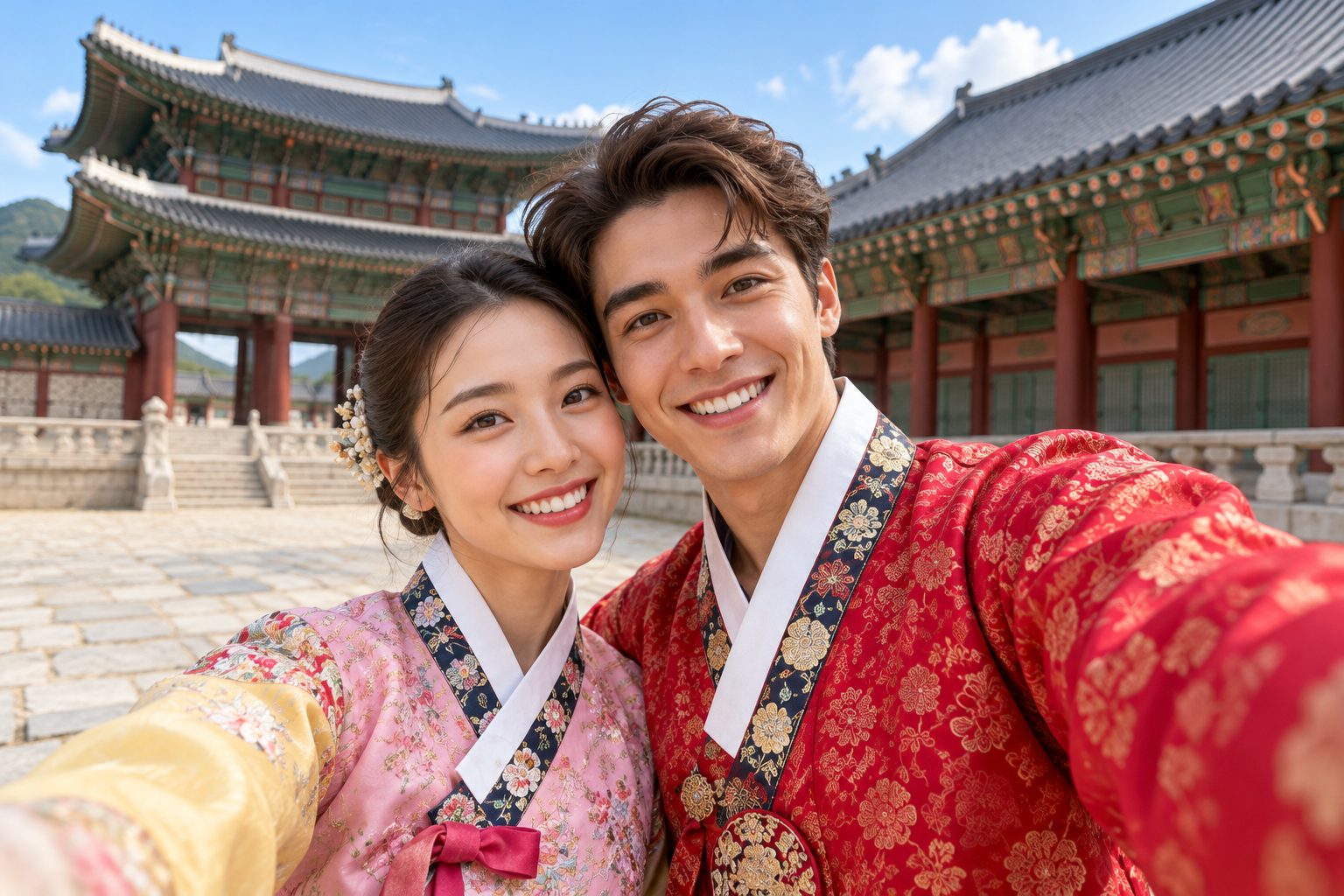
You’ve been seeing someone in Seoul for a few weeks. It’s going well. Then, at 12:40 on a Tuesday, a message: “밥 먹었어?” (“Did you eat?”).
You reply “yes”, because you did. Then you wonder whether you missed something. Was it an invitation? A test? Just hello?
Mostly, it was hello with a hug in it. In Korea, asking whether someone has eaten is one of the most common ways to say I’m thinking about you (we explain why in Why Koreans say “Have you eaten?”). The perfect answer is short, plus the question back: “응, 너는?” (“Yep, you?”).
That’s a good model for this whole article. There are recognizable habits in Korean dating, and knowing them saves you a lot of confusion. But there’s no manual for “the Korean girlfriend”. Treat each habit as a question worth asking her, not a rule she must follow.
(We wrote the companion piece on dating a Korean boyfriend, too. A lot of it applies both ways.)
1. The check-ins
Many Korean couples message through the day on KakaoTalk: good morning, lunch?, leaving work, home now, good night. Keeping in touch has its own word, 연락 (yeol-lak), and “he/she doesn’t keep in touch” is one of the most common complaints in Korean relationship advice.
If you come from a more independent dating culture, this can feel like a lot. Inside the culture, the small messages are the affection: they say “you’re part of my day.”
What works: say early how your days run. “I can’t text during meetings, but I like hearing from you and I’ll reply when I’m free.” That’s a boundary, not a rejection.
What doesn’t count as culture: demands to share your location around the clock, hand over passwords or account for every hour. That’s a relationship problem, in any country.
2. Day one, day 100
Korean couples usually know exactly when they started dating: the day someone asked “우리 사귈래?” (“Do you want to go out with me?”) and the other said yes. Couples count days from there, with day one as “1”, and the 100-day mark (백일, baek-il) is the first big celebration. Some couples keep marking 200, 300 and 1,000 days.
Add the calendar: Valentine’s Day, White Day (March 14), Pepero Day (November 11), Christmas Eve (a date night in Korea more than a family night) and, for the enthusiastic, a themed “couple day” on the 14th of every month.
Does your girlfriend care? Some love it. Some find it cheesy. Some forget. Ask: “Do you like celebrating 100 days?” It’s a much better way to find out than missing it. A small, thoughtful plan usually beats an expensive gift.
3. Couple outfits and couple rings
Matching sneakers, matching hoodies, couple phone cases and couple rings (often around day 100) are a visible, cheerful part of Korean dating. The idea is simple: a public, playful “we’re together”.
If she suggests matching jackets and you’d rather die, say so kindly and offer a middle ground: matching rings, matching keyrings, the same color but different clothes. What makes it sweet is that you both enjoy it.
4. Who pays
You’ll find confident claims online that “Korean men always pay” or that “everyone splits now”. Neither is a rule.
The older script, in which the man (or the older partner) pays for most dates, still exists, especially among older couples. Younger couples often take turns (“I’ll get dinner, you get coffee”) or keep a date account (데이트 통장, de-i-teu tong-jang), into which both put the same amount each month for shared dates. Income, age and student-versus-working life all shape it.
You’ll hear “내가 쏠게” (“I’ll treat you”). It’s a generous offer, and the graceful move is to treat next time. If money starts to feel uneven or stressful, talk about it directly. Arguing over the bill at the counter is the one approach almost everyone agrees is worst.
5. Oppa, jagi and the language of closeness
If you’re an older man dating a Korean woman, she may call you 오빠 (op-pa). It literally means “older brother” when a woman says it, and it’s the standard warm word for an older boyfriend. Couples also use 자기 (ja-gi, roughly “honey”) and nicknames.
Two cautions. First, don’t ask to be called oppa because a drama made it sound romantic. Some women use it naturally, others don’t like it. Second, a couple may start in polite speech and drift into casual speech (반말, ban-mal) as they get closer. For many people that switch feels like a milestone, but it shouldn’t be demanded as proof of love. Some partners stay polite out of habit or because of an age gap, and that’s fine. (Grammar lives on Korean Toolbox. Here we only care about what the switch feels like.)
6. Her friends
Being introduced to her friends means you’re entering her world. Expect group meals with shared dishes, a few personal questions (age comes up fast: here’s why) and some teasing.
This is where 눈치 (nun-chi), reading the room, helps: notice who’s oldest, whether someone is quietly pouring drinks, and when the evening is winding down. And a kindness that matters a lot: don’t make her translate every sentence all night. Learn a few greetings, ask her friends about themselves, and let her relax too.
7. Her parents
In many Korean families, meeting the parents means the relationship is serious, sometimes “we’re thinking about marriage” serious. Some couples date for years before it happens. In other families it’s a casual dinner.
Ask her what this particular meeting means and what would make it comfortable. Common basics: arrive on time, bring a modest gift (fruit, good tea, something from your hometown), take your shoes off at the door, stand when her parents enter, use polite speech, accept a drink with two hands. Being warm, punctual and willing to listen matters more than a perfect bow. We’ll cover this in detail in a separate guide.
8. Care shown, not always said
Many Koreans grew up in homes where “I love you” was rare and care was done: making sure you ate, walking you to the bus, buying medicine when you sniffled, remembering your favorite snack. That slow, everyday warmth is part of what Koreans call 정 (jeong).
The same quietness can apply to problems. Short replies, “괜찮아” (“I’m fine”) with a flat face, or “아무거나” (“anything is fine”) when you ask about dinner can sometimes mean please notice. Not always. The kind response is a gentle, direct question: “Is something bothering you? You can tell me.” (More on this in why Koreans rarely say no directly.)
9. Ignore the internet’s “Korean girlfriend” myths
Plenty of online guides claim Korean women are more jealous, more traditional, more demanding or more devoted than women elsewhere. That flattens millions of people into one personality type. It’s also risky: if you believe possessiveness is “just the culture”, you might put up with things you shouldn’t. If you expect a drama heroine, you’ll miss the real person in front of you.
Culture explains customs. It doesn’t decide who she is.
Five conversations to have early
- How often do we like to talk during the day?
- Which dates matter to us? Birthdays, 100 days, holidays, gifts or no gifts.
- How do we handle money? Turns, a shared account, or something else that feels fair.
- What does meeting friends or parents mean for us?
- How do we fight? Some people want to talk it out now, others need time. Agree on how to come back to it.
None of these are uniquely Korean. That’s the point: knowing the culture gives you better questions, and the answers belong to the two of you.