Start here
Where to begin
Korean culture can feel like a game where everyone knows the rules but you. Pick the path that fits you. Each one takes about an hour, and afterwards a lot of Korean life will suddenly make sense. Then test your nunchi.
The five things that surprise visitors most, and how to handle them gracefully.

Friends & Social Life · 나이
Why Koreans ask your age before your name
It isn't nosiness. Knowing who is older helps Koreans decide how to talk to you. The hidden grammar of a first meeting, and what changed when Korea dropped 'Korean age' in 2023.

Food & Table · 반찬 더 주세요
Free side dishes, self-serve water and who sets the spoons: Korean restaurant culture explained
Why banchan refills are free, why you pour your own water, why the youngest lays out spoons and chopsticks, what the table bell is for, and how paying works at a Korean restaurant.

Food & Table · 밥 먹었어?
Why Koreans say 'Have you eaten?' instead of hello
"밥 먹었어?" isn't really about lunch. How a greeting shaped by hungry decades became Korea's way of saying 'I care about you', and the other food phrases that hide feelings.

Public & Everyday Life · 빨리빨리
Ppalli-ppalli: where Korea's 'hurry, hurry' culture came from
Thirty-minute delivery, elevator door buttons pressed twice, a 428 km expressway built in under two and a half years. How Korea became the country of 빨리빨리, what it cost, and what it's like to live with.

Food & Table · 술자리
Turn your head, use two hands: Korean drinking etiquette, ranked by how much it matters
Why you don't pour your own soju, why the youngest turns away to drink, what 'one shot' really means, and how to say no to a drink without offending anyone. The rules, and the reasons behind them.
For new colleagues, students, clients and anyone joining a Korean team or class.

Friends & Social Life · 돌려 말하기
Why Koreans rarely say 'no' directly (and how to hear it anyway)
"I'll think about it." "That might be a little difficult." In Korea these often mean no. Why many Koreans avoid being blunt, the phrases that carry a hidden answer, and how to reply without causing offense.

Words · 눈치
Nunchi: the Korean sixth sense, explained in six everyday scenes
Nunchi (눈치) is the skill of reading a room before anyone speaks. What it means, where you'll need it in Korea, the phrases built around it, and its stressful side.
Food & Table · 술자리
Turn your head, use two hands: Korean drinking etiquette, ranked by how much it matters
Why you don't pour your own soju, why the youngest turns away to drink, what 'one shot' really means, and how to say no to a drink without offending anyone. The rules, and the reasons behind them.

Money & Gifts · 축의금
How much cash goes in a Korean wedding envelope (and why families keep a ledger)
At most Korean weddings, guests give cash rather than gifts. The 2024-2025 survey numbers on how much people give, the attend-vs-send rule, how the reception desk works, and the unspoken rule of giving it back.
Couple culture, parents, money and the feelings that go unsaid.

Dating & Marriage · 연애
Dating a Korean boyfriend: the unwritten rules (and the K-drama myths)
Day-one anniversaries, nonstop KakaoTalk, couple outfits, who pays, 'oppa', meeting his parents and the army. What dating a Korean man is often like, why, and what's changing.
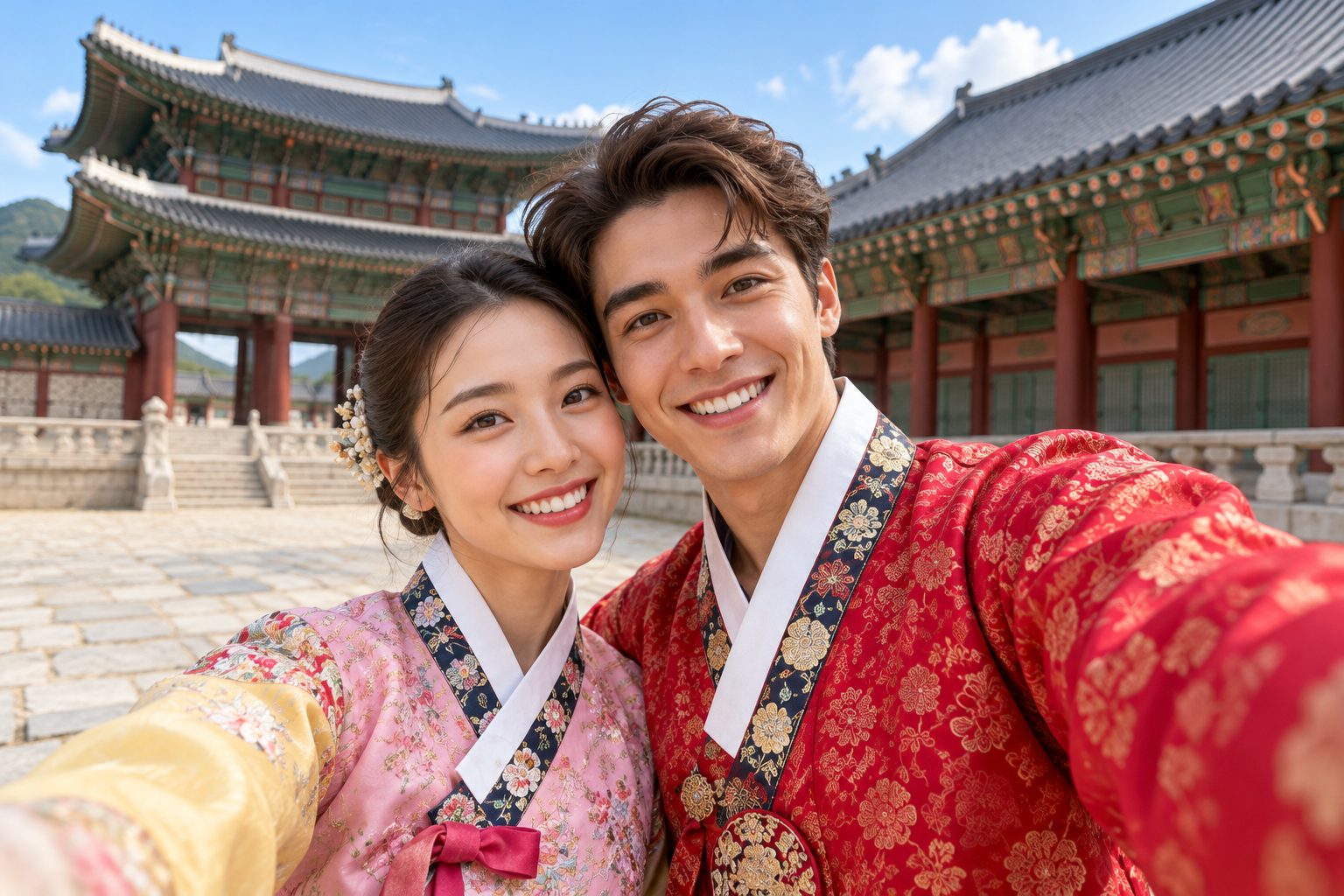
Dating & Marriage · 연애
Dating a Korean girlfriend: the unwritten rules (and the ones you can ignore)
Check-in texts, 100-day anniversaries, couple outfits, who pays, 'oppa', her friends and her parents. The Korean dating habits worth knowing, why they exist, and how to talk about them without stereotypes.
Friends & Social Life · 돌려 말하기
Why Koreans rarely say 'no' directly (and how to hear it anyway)
"I'll think about it." "That might be a little difficult." In Korea these often mean no. Why many Koreans avoid being blunt, the phrases that carry a hidden answer, and how to reply without causing offense.
Food & Table · 밥 먹었어?
Why Koreans say 'Have you eaten?' instead of hello
"밥 먹었어?" isn't really about lunch. How a greeting shaped by hungry decades became Korea's way of saying 'I care about you', and the other food phrases that hide feelings.
What’s really going on in the scenes that confuse international viewers.
Friends & Social Life · 나이
Why Koreans ask your age before your name
It isn't nosiness. Knowing who is older helps Koreans decide how to talk to you. The hidden grammar of a first meeting, and what changed when Korea dropped 'Korean age' in 2023.
Words · 눈치
Nunchi: the Korean sixth sense, explained in six everyday scenes
Nunchi (눈치) is the skill of reading a room before anyone speaks. What it means, where you'll need it in Korea, the phrases built around it, and its stressful side.
Dating & Marriage · 연애
Dating a Korean boyfriend: the unwritten rules (and the K-drama myths)
Day-one anniversaries, nonstop KakaoTalk, couple outfits, who pays, 'oppa', meeting his parents and the army. What dating a Korean man is often like, why, and what's changing.
Food & Table · 밥 먹었어?
Why Koreans say 'Have you eaten?' instead of hello
"밥 먹었어?" isn't really about lunch. How a greeting shaped by hungry decades became Korea's way of saying 'I care about you', and the other food phrases that hide feelings.